How Compliance Updates Reshape Bonus Structures and Affiliate Payout Models in Licensed Digital Casinos
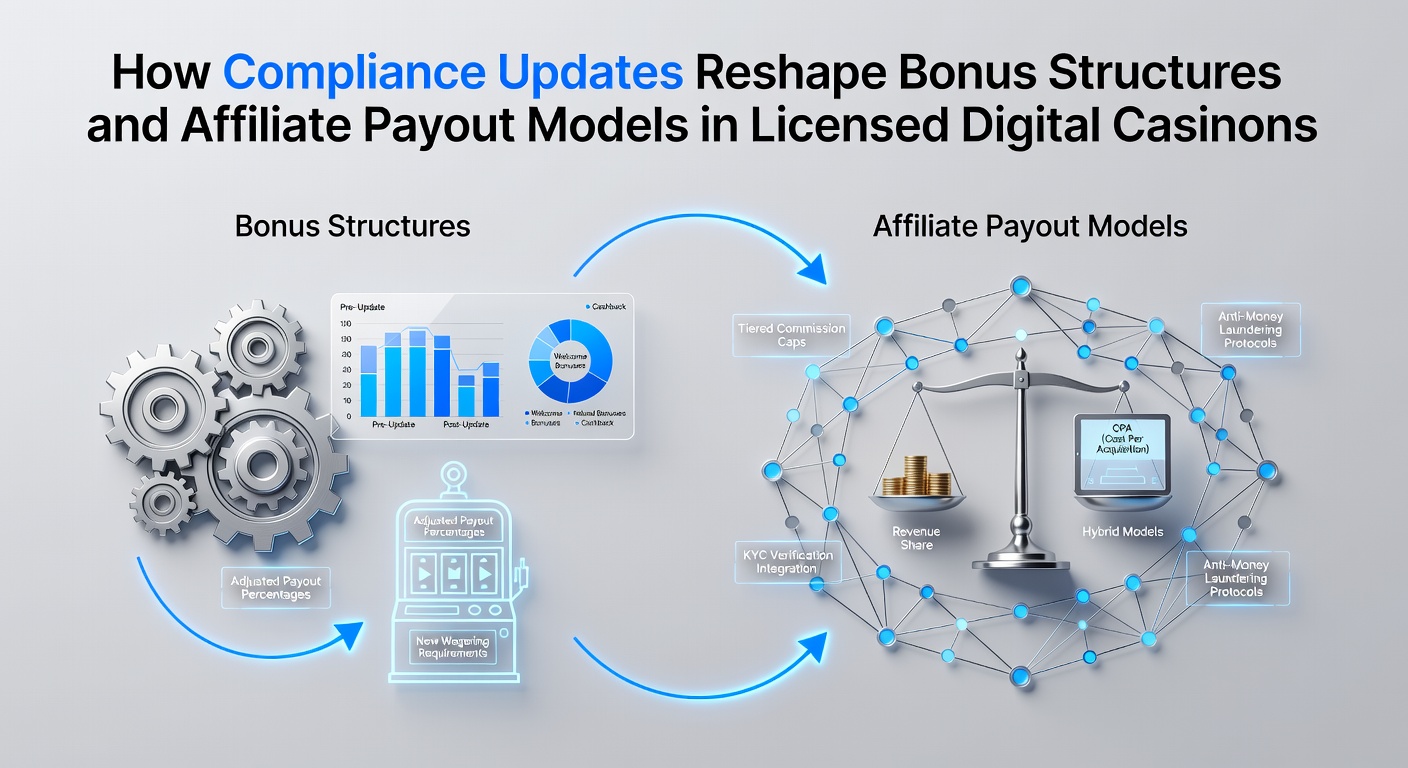
Regulatory bodies across multiple jurisdictions have introduced fresh compliance frameworks that directly influence how licensed digital casinos structure player bonuses and compensate affiliates, and these shifts have accelerated since early 2025 with several measures scheduled for full enforcement by June 2026. Data from industry monitoring services shows that operators must now embed stricter verification steps into promotional offers, which in turn alters the revenue-sharing agreements that define affiliate payouts.
Evolving Regulatory Requirements Across Regions
Authorities in Malta, Ontario, and New Jersey have each updated their licensing conditions to emphasize transparent bonus mechanics and responsible player acquisition, while Australia's ACMA has aligned its digital wagering codes with similar principles. These updates require casinos to disclose wagering requirements, maximum win caps, and eligibility criteria in plain language before any promotion activates. Operators who fail to meet these standards face license reviews that can suspend affiliate programs until corrections occur.
One study released by the European Gaming and Betting Association documented a 22 percent reduction in complex multi-tier bonus ladders among platforms operating under revised Maltese rules, and the same report noted corresponding adjustments in how affiliates earn commissions from those simplified structures. The changes create a direct link between compliance documentation and the formulas used to calculate affiliate revenue shares.
Direct Effects on Bonus Structures
Bonus models now incorporate mandatory cooling periods and account-level spending limits that tie directly to compliance checks, which means welcome packages and reload offers carry built-in thresholds that reset after each verification cycle. Platforms must log player consent timestamps and display remaining wagering progress in real time, features that increase development costs yet reduce the risk of regulatory penalties.
Figures released by the New Jersey Division of Gaming Enforcement reveal that average bonus values offered to new registrants dropped from $85 in Q4 2024 to $62 by Q1 2026, a shift operators attribute to stricter rules on free-spin expiration and cash-out conditions. Affiliates who once promoted high-value deposit matches now promote campaigns with lower headline amounts but higher long-term retention metrics, because sustained play generates steadier commission streams under the new payout models.
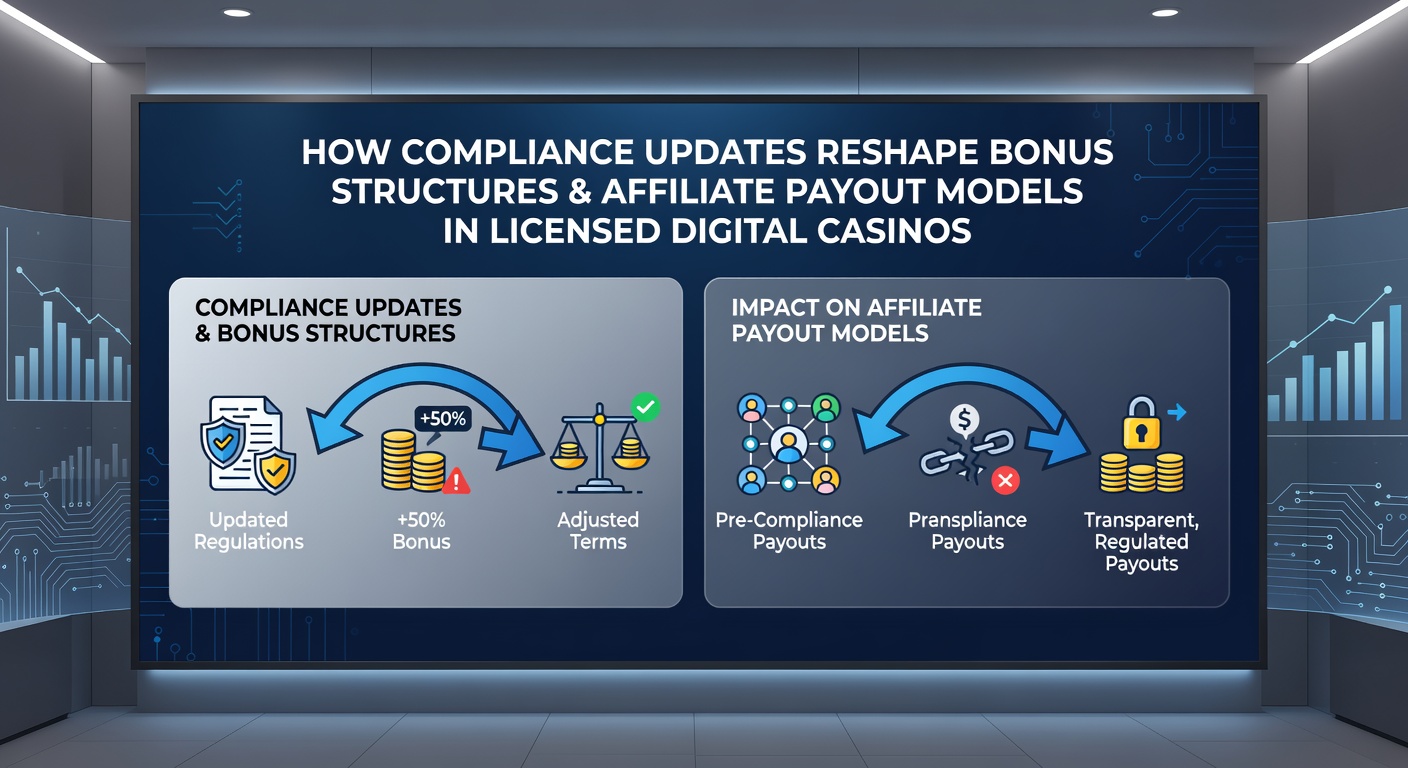
Adjustments to Affiliate Payout Models
Affiliate agreements have moved away from pure revenue-share percentages toward hybrid structures that include compliance score multipliers. Partners who maintain verified traffic sources and avoid targeting restricted player segments receive uplift factors on their monthly payouts, while those whose referrals trigger repeated verification flags see reduced rates or delayed settlements. These conditional terms appear in contracts issued after January 2025 and become mandatory across most European and North American licenses by June 2026.
Research from the University of Nevada's International Gaming Institute tracked 180 affiliate programs and found that 64 percent introduced tiered commission schedules tied to player verification completion rates within the first quarter of 2026. The same dataset indicated that average affiliate earnings per active referred player rose 11 percent when operators paired the new models with transparent bonus designs, because clearer terms improved player retention and reduced chargebacks.
Operators in Ontario have begun publishing quarterly compliance dashboards that affiliates can access through partner portals, allowing real-time tracking of how individual campaigns perform against regulatory benchmarks. This transparency has prompted some networks to diversify their traffic sources toward regions with stable licensing environments rather than chasing short-term volume in less predictable markets.
Implementation Patterns Observed in 2026
By June 2026 several major platforms had completed system upgrades that automatically adjust bonus eligibility based on real-time regulatory feeds, and these same systems feed data into affiliate settlement engines. The result is a unified workflow where every promotional dollar and every commission payment carries an auditable compliance tag. Smaller operators have formed consortiums to share the cost of these upgrades, while larger groups have absorbed the expense into existing technology budgets.
Industry observers note that payment processors now require separate compliance attestations before releasing funds to affiliates, which adds a layer of documentation but also reduces disputes over player bonus abuse. The added checks have lengthened settlement cycles from 15 days to an average of 22 days across the sample of 45 licensed sites examined in a recent trade association survey.
Conclusion
Compliance updates continue to link bonus design and affiliate compensation into a single operational framework that demands precise tracking and transparent reporting. Licensed operators that align their promotional calendars and partner agreements with these requirements maintain uninterrupted access to regulated markets, whereas those that lag face revenue interruptions and program restrictions. The pattern established through 2025 and into mid-2026 points toward further integration of regulatory data streams into both player incentives and partner payouts.