How Satellite Weather Feeds Quietly Calibrate Live Dealer Shift Rotations in Caribbean-Facing Digital Card Rooms
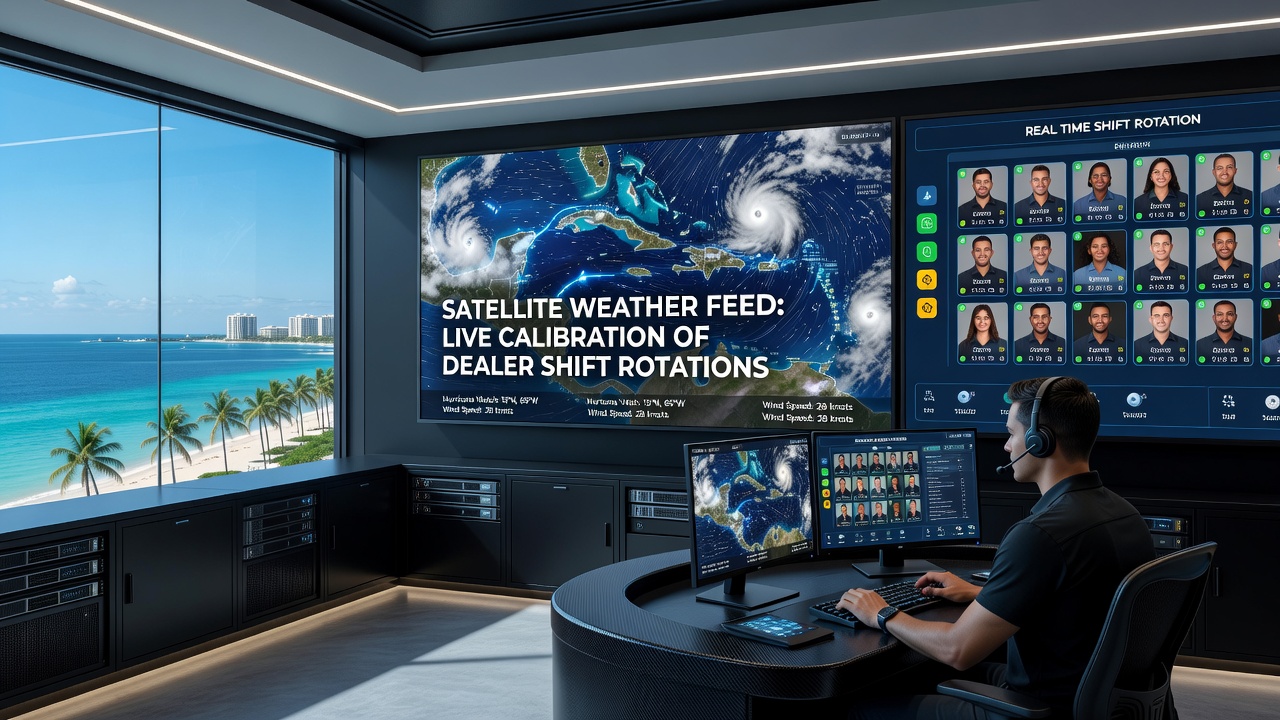
Caribbean-facing digital card rooms rely on live dealer operations that depend on stable connectivity and consistent staffing, while satellite weather feeds supply the raw data that shapes those staffing decisions well before storms reach land. Operators in jurisdictions such as Antigua and Barbuda, Curaçao, and the Dominican Republic integrate feeds from geostationary satellites into workforce management platforms so that shift rotations adjust automatically when forecast models project heavy rainfall, high winds, or electrical disruptions. Data from the National Oceanic and Atmospheric Administration shows that tropical systems in the Atlantic basin produce measurable impacts on terrestrial internet infrastructure within 48 hours of landfall predictions, prompting schedulers to pre-position dealers and technical support teams across staggered time zones.
Integration of Satellite Data Streams
Modern platforms pull hourly updates from polar-orbiting and geostationary satellites, then merge those readings with historical outage records maintained by local internet service providers. Analysts cross-reference wind-speed thresholds and precipitation rates against past incidents where fiber cuts or power fluctuations reduced table availability by up to 30 percent. Scheduling algorithms therefore generate revised rosters 36 to 72 hours ahead, moving dealers from morning to evening blocks or redistributing them among backup studios located farther inland. Those adjustments occur quietly inside workforce software that already tracks licensing requirements and game-specific certifications, so the weather layer functions as one additional constraint rather than a separate system.
Operational Adjustments During Peak Storm Seasons
July 2026 fell within an above-average Atlantic hurricane period according to seasonal outlooks released by the National Hurricane Center, and several operators reported running parallel dealer pools for 11 consecutive days when satellite models flagged multiple wave trains crossing the Lesser Antilles. Instead of canceling tables, platforms shifted certified dealers onto later rotations while routing players to studios on the leeward side of islands where connectivity remained intact. Observers note that the same data sets also inform decisions about when to activate redundant satellite internet links, ensuring that live streams continue even if primary terrestrial circuits drop. Research from the University of the West Indies indicates that real-time fusion of satellite imagery with ground-based radar reduces forecast error margins by approximately 22 percent for wind fields over small island chains, giving operators a narrower but more reliable window for rotation changes.
Regulatory and Compliance Considerations
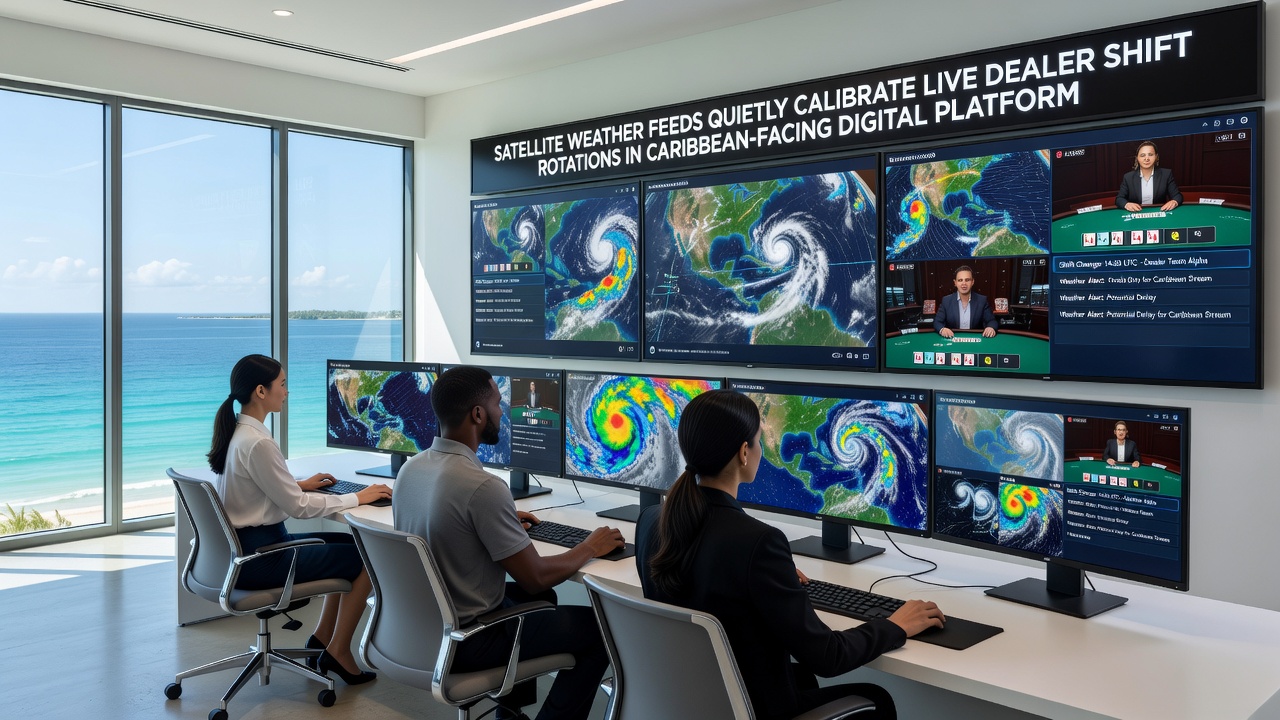
Licensing authorities in the Caribbean require documented business continuity plans that explicitly address weather-related service interruptions. Satellite-derived forecasts now appear in those plans as primary triggers for activating contingency rosters, because regulators accept the data as verifiable and timestamped. Operators submit quarterly reports showing how often weather inputs prompted rotation changes, and those figures help auditors verify that minimum staffing levels for each game type remained above regulatory thresholds. Because the underlying satellite feeds originate from public sources, the process satisfies transparency requirements without exposing proprietary scheduling logic.
Workforce and Technical Infrastructure Impacts
Dealers who live in coastal communities often face transportation challenges once forecasts indicate sustained winds above 40 knots. Platforms therefore maintain lists of dealers who can reach inland backup facilities within two hours, then automatically prioritize those individuals when satellite models project landfall within 24 hours. Technical teams receive parallel alerts so that hardware checks on encoding equipment and backup generators occur before peak storm arrival. Figures released by the Caribbean Institute for Meteorology and Hydrology reveal that average advance warning times for heavy rainfall events have increased from 18 hours in 2018 to 31 hours in 2025, directly extending the lead time available for shift recalibration.
Future Developments in Predictive Scheduling
Industry working groups have begun testing machine-learning models that combine satellite precipitation nowcasts with historical player traffic data to predict not only when tables should close but also which games will experience the steepest drop in participation. Early trials indicate that incorporating these combined data streams can reduce unplanned table closures by 15 percent compared with weather-only triggers. Caribbean regulators continue to monitor these experiments to determine whether updated continuity standards should mandate minimum accuracy thresholds for any weather-integrated scheduling tool.
Conclusion
Satellite weather feeds have become embedded infrastructure within live dealer operations across Caribbean-facing digital card rooms, quietly driving rotation decisions that keep tables staffed and streams uninterrupted. The same public data streams that support regional disaster preparedness now underpin the precise timing of dealer movements, technical checks, and redundancy activations. As forecast resolution improves and regulatory expectations evolve, operators continue to refine how those feeds translate into daily workforce plans without altering the visible player experience.