Tracing RNG Certification Audits Across Independent Labs That Validate Progressive Jackpot Integrity in Licensed Platforms
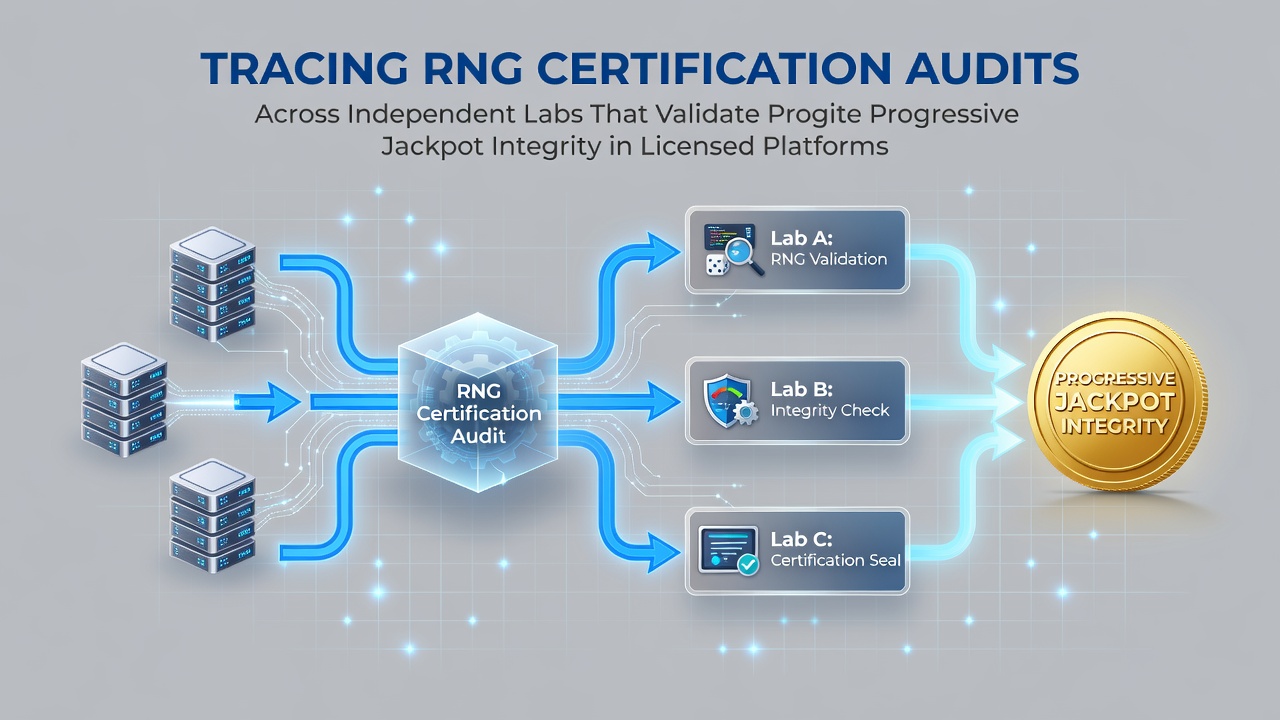
Independent laboratories conduct RNG certification audits to confirm that random number generators in licensed gaming platforms produce outcomes that meet regulatory standards, and this process extends specifically to progressive jackpot mechanisms where contributions accumulate across multiple players and sites. These audits trace every layer of software implementation from initial code submission through final regulatory approval, with labs examining both the core RNG algorithms and the separate modules that handle jackpot pooling, triggering conditions, and payout distributions.
Core Elements of RNG Certification for Progressive Systems
Progressive jackpots rely on RNG outputs to determine win eligibility while simultaneously tracking pooled funds that grow with each qualifying bet, so certification requires labs to verify that the random sequences remain unbiased even as the jackpot meter updates in real time. Auditors examine source code for the RNG itself, then isolate the jackpot controller to confirm that seed values, scaling factors, and contribution percentages do not introduce predictable patterns. Data from these tests feeds into detailed reports that regulators review before granting or renewing platform licenses.
Testing protocols typically include millions of simulated spins across various jackpot tiers, with statistical analysis checking for uniformity, independence, and correct distribution of outcomes. Labs also simulate network latency and multi-site contribution scenarios to ensure that progressive totals reflect actual player activity without discrepancies. When anomalies appear, developers must adjust parameters and resubmit for retesting before the system receives clearance.
Independent Labs and Their Audit Methodologies
Several accredited laboratories handle the bulk of this work, each maintaining distinct testing suites that regulators recognize across multiple jurisdictions. Gaming Laboratories International applies its GLI-19 and GLI-21 standards to evaluate both standalone RNGs and linked progressive environments, while BMM Testlabs focuses on hardware-software integration points that affect jackpot integrity during live operation. iTech Labs conducts similar evaluations with emphasis on cryptographic seeding methods that protect against external manipulation.
These organizations operate under ISO 17025 accreditation and submit their own processes to periodic peer review, creating a chain of traceability that begins with the software provider and ends with the licensing authority. Reports generated during July 2026 audits, for instance, incorporated updated requirements for real-time monitoring of progressive pools across state lines in the United States and cross-border networks in Europe.
Tracing the Audit Pathway in Licensed Environments
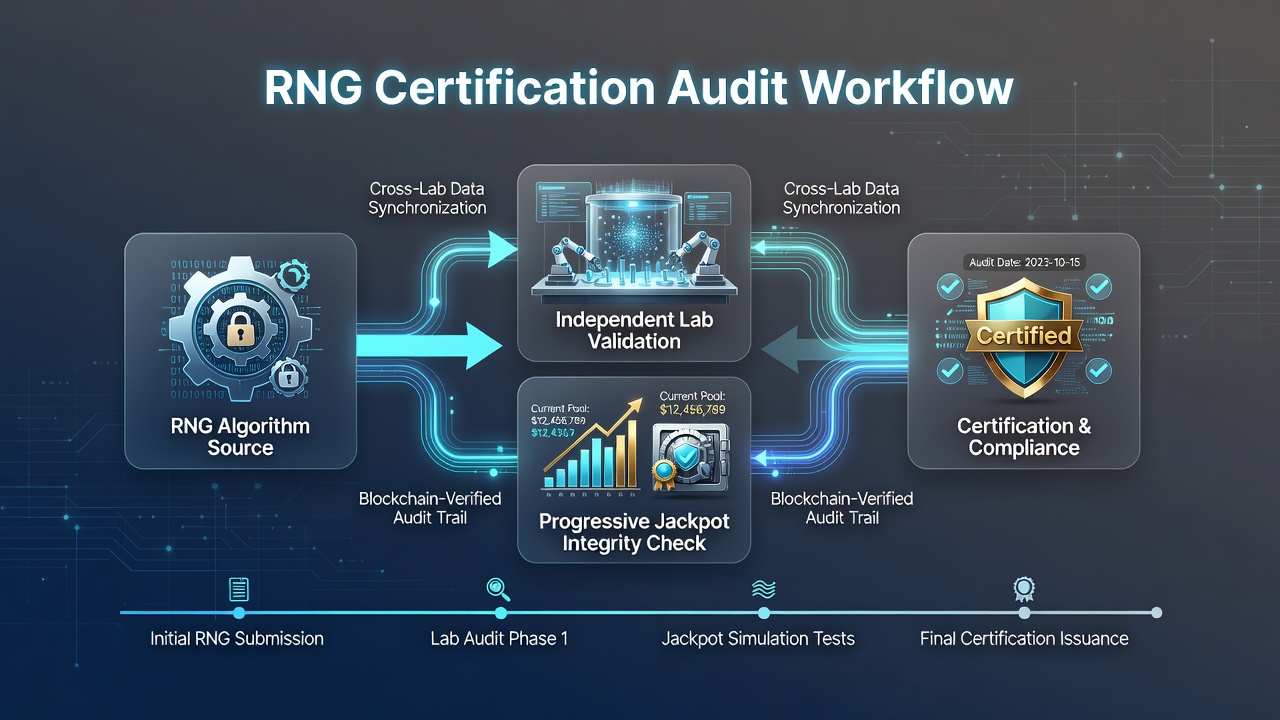
The audit trail starts when a platform operator or game supplier submits software packages to a chosen lab, accompanied by documentation that details RNG implementation and jackpot mechanics. Lab personnel then perform static code analysis followed by dynamic testing in isolated environments that replicate production conditions. Once initial results satisfy internal benchmarks, the lab issues a certification letter that the operator forwards to the relevant regulatory body for final acceptance.
Regulators such as the Malta Gaming Authority and the New Jersey Division of Gaming Enforcement maintain databases that log each certification event, allowing them to cross-reference lab findings against live platform data during routine compliance checks. This linkage enables authorities to detect any post-certification modifications that might affect progressive jackpot fairness without requiring full re-audits in every instance.
Recent Developments and Data Patterns
Industry reports compiled through mid-2026 show that labs processed over 1,200 RNG submissions related to progressive titles in the preceding twelve months, with roughly 18 percent requiring at least one round of remediation before approval. Data collected by the Nevada Gaming Control Board indicates that certified progressive systems maintained payout ratios within 0.3 percent of theoretical targets across more than 450 million resolved jackpot events. These figures emerge from aggregated test logs rather than individual operator disclosures, providing regulators with benchmarks for ongoing oversight.
Academic researchers at institutions including the University of Nevada, Reno have examined anonymized audit datasets to study how RNG variance interacts with jackpot contribution rates, and their findings feed into updated testing guidelines circulated among labs and regulators. Such studies highlight the importance of maintaining separate RNG instances for base game outcomes versus jackpot trigger events to prevent correlation risks.
Conclusion
Certification audits performed by independent laboratories form the foundation for regulatory confidence in progressive jackpot integrity across licensed platforms, with documented processes that trace RNG performance from code review through statistical validation and ongoing monitoring. As platforms expand multi-jurisdictional networks, the same audit frameworks continue to adapt, incorporating new data requirements that reflect both technological changes and enforcement priorities established by bodies in North America, Europe, and Australia. This structured approach ensures that progressive systems operate within defined parameters while providing regulators with verifiable records for each certified title.