Vendor Certification Timelines Impact Game Release Schedules Across Regulated Digital Wagering Markets
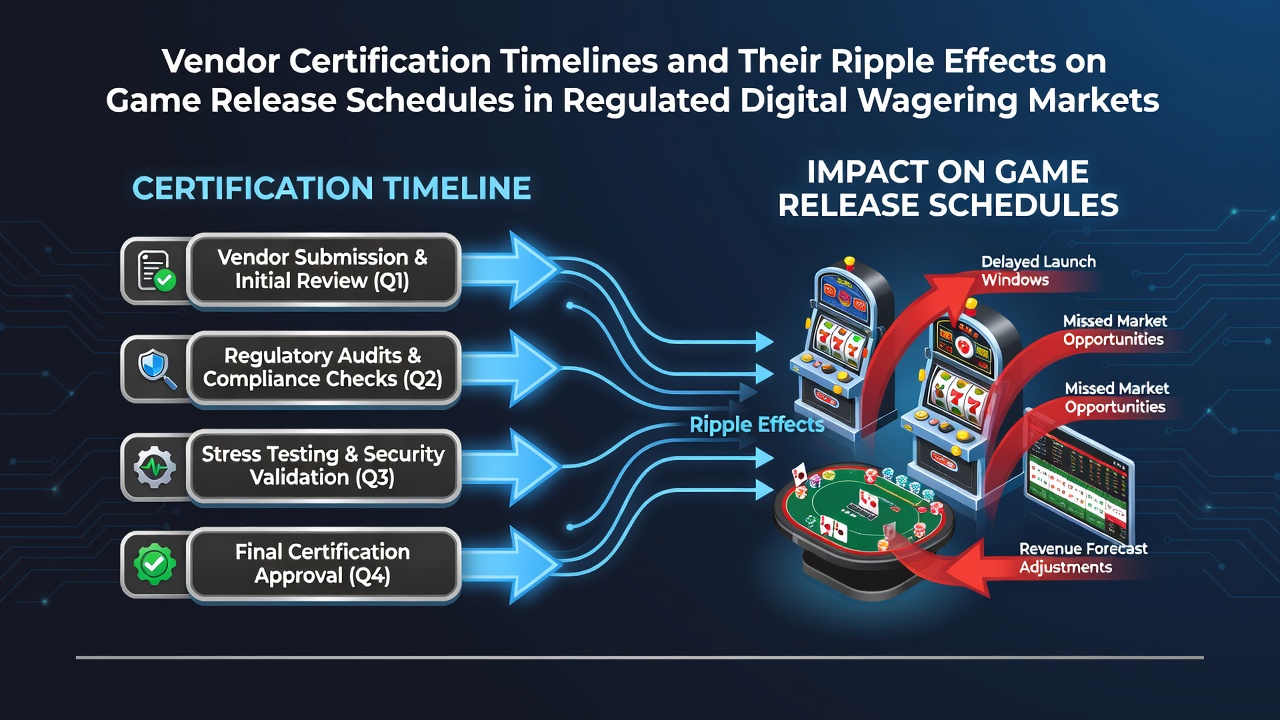
Regulated digital wagering markets require vendors to navigate structured certification processes before new games reach operators and players, and these timelines directly influence release schedules in jurisdictions from North America to Europe and Australia. Certification involves technical testing, security audits, and compliance verification that can span weeks to months depending on the regulatory body and game complexity, which means operators often adjust launch plans around these fixed checkpoints rather than market demand alone.
Core Elements of Vendor Certification Procedures
Vendors submit software builds to approved testing laboratories that evaluate random number generators, payout accuracy, and integration with platform systems, while regulators review results before granting final approval. In many regions the process includes multiple review rounds where issues like code vulnerabilities or documentation gaps trigger resubmissions that extend overall duration. Research from gaming compliance organizations indicates that standard slot titles typically complete certification in four to eight weeks in streamlined markets, whereas live dealer products or those with complex bonus mechanics often require twelve weeks or longer because of additional scrutiny on fairness algorithms and data logging features.
Jurisdictional Variations in Approval Durations
Markets differ significantly in their certification frameworks and resulting timelines. New Jersey's Division of Gaming Enforcement maintains detailed technical standards that vendors must meet through independent labs, and data from 2025 shows average processing times around six weeks for certified providers with prior approvals. Ontario's Alcohol and Gaming Commission applies a risk-based approach where established vendors with clean records receive expedited reviews, yet new entrants or innovative mechanics still encounter full audits lasting up to ten weeks. Australian state regulators coordinate through national standards that add layers of financial reporting verification, stretching timelines beyond those seen in single-state U.S. systems. Observers note that these differences create staggered release patterns where a game approved in one market may wait additional months before operators in neighboring jurisdictions can launch it.
Certification backlogs emerge when multiple vendors submit simultaneously or when regulators introduce updated requirements mid-cycle. During periods of high submission volume, laboratories report queue times that add two to four weeks before testing even begins. Operators respond by prioritizing titles already in advanced stages or shifting focus to content that reuses previously certified components, which reduces but does not eliminate delays across broader portfolios.
Ripple Effects on Release Planning and Market Dynamics
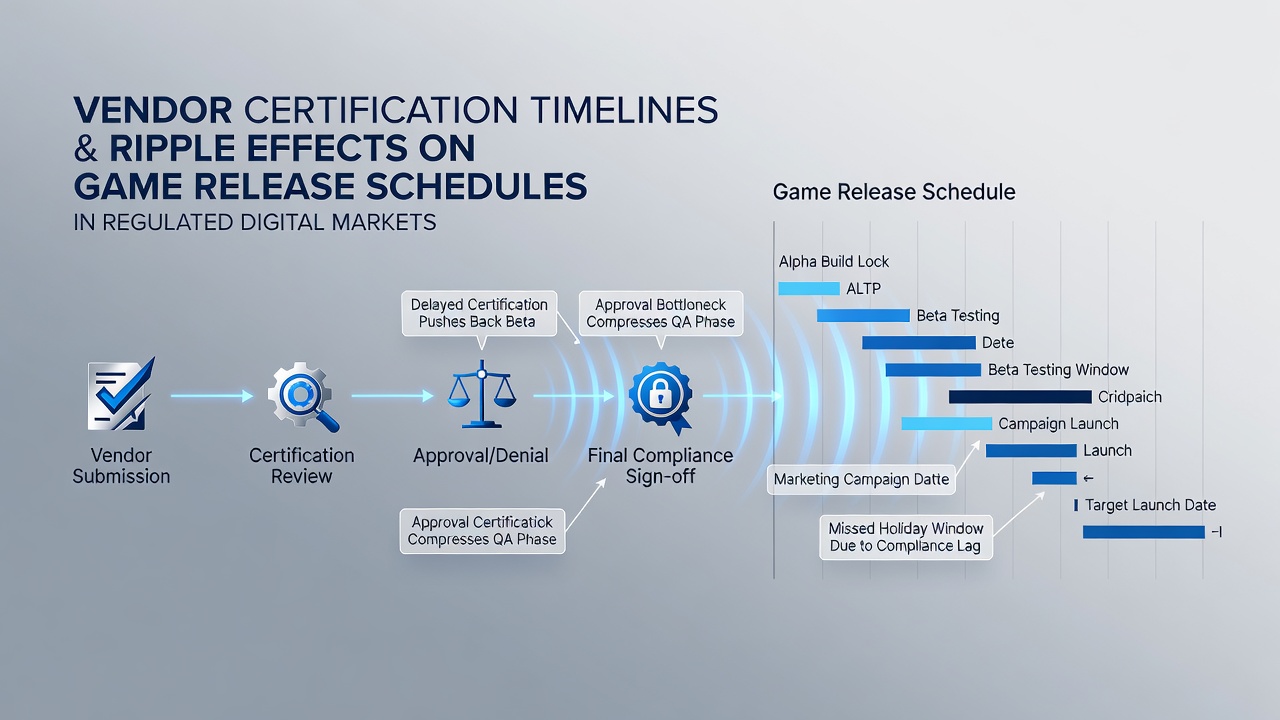
Release schedules in digital wagering platforms align closely with certification completion dates because operators cannot deploy uncertified games without risking license violations. A vendor that finishes testing in early July 2026 might still face regulator sign-off that pushes actual availability into late August or September, forcing marketing teams to revise promotional calendars and affiliate programs accordingly. Multi-jurisdictional operators face compounded challenges since a single game often requires separate certifications for each active market, leading to phased rollouts where the same title appears weeks or months apart across regions.
These timing constraints affect competition as well. Smaller vendors with limited resources for parallel submissions sometimes experience longer effective delays than larger firms that maintain dedicated compliance teams, which can influence which games gain early visibility in new or expanding markets. Figures from industry associations reveal that operators frequently maintain certification pipelines six to nine months ahead of intended launch windows to buffer against unexpected extensions. When a key title misses its projected certification window, downstream effects include revised revenue forecasts, adjusted player acquisition campaigns, and occasional substitution with alternative content that cleared earlier.
Interactions With Platform Updates and Compliance Changes
Platform-level updates such as new payment integrations or security patches often trigger recertification requirements even for previously approved games, creating additional scheduling friction. Regulators in several Canadian provinces have implemented mandatory retesting intervals that coincide with annual license renewals, and vendors must factor these recurring obligations into long-term release roadmaps. Data from European testing laboratories shows that games incorporating live elements or third-party feeds encounter higher rates of iterative feedback during certification, which lengthens timelines compared to purely RNG-based offerings.
Operators mitigate some ripple effects through modular game design that allows core mechanics to receive approval while peripheral features undergo separate review, yet this strategy works only when regulators accept such segmented submissions. In practice, many jurisdictions require holistic evaluation of the complete player experience, which limits the effectiveness of partial approvals. Those tracking market activity observe that release clustering tends to occur immediately after major regulatory updates stabilize, as vendors rush to clear accumulated backlogs once new standards become clear.
Conclusion
Vendor certification timelines function as structural gatekeepers that shape when games enter regulated digital wagering markets, with direct consequences for operator planning, competitive positioning, and content availability across regions. Jurisdictional differences in process length and requirements produce uneven release patterns that persist even as technology and regulatory frameworks continue to evolve. Understanding these mechanics helps explain why certain titles appear on staggered schedules and why operators maintain extended certification pipelines to manage market entry effectively.